Boundaries: Burdens and Loads: June 2026

by Natalie Holmyard
Boundaries: Burdens and Loads
Recently, I have been rereading a wonderful book alongside a few others in our community, called Boundaries by Dr Henry Cloud and Dr John Townsend.
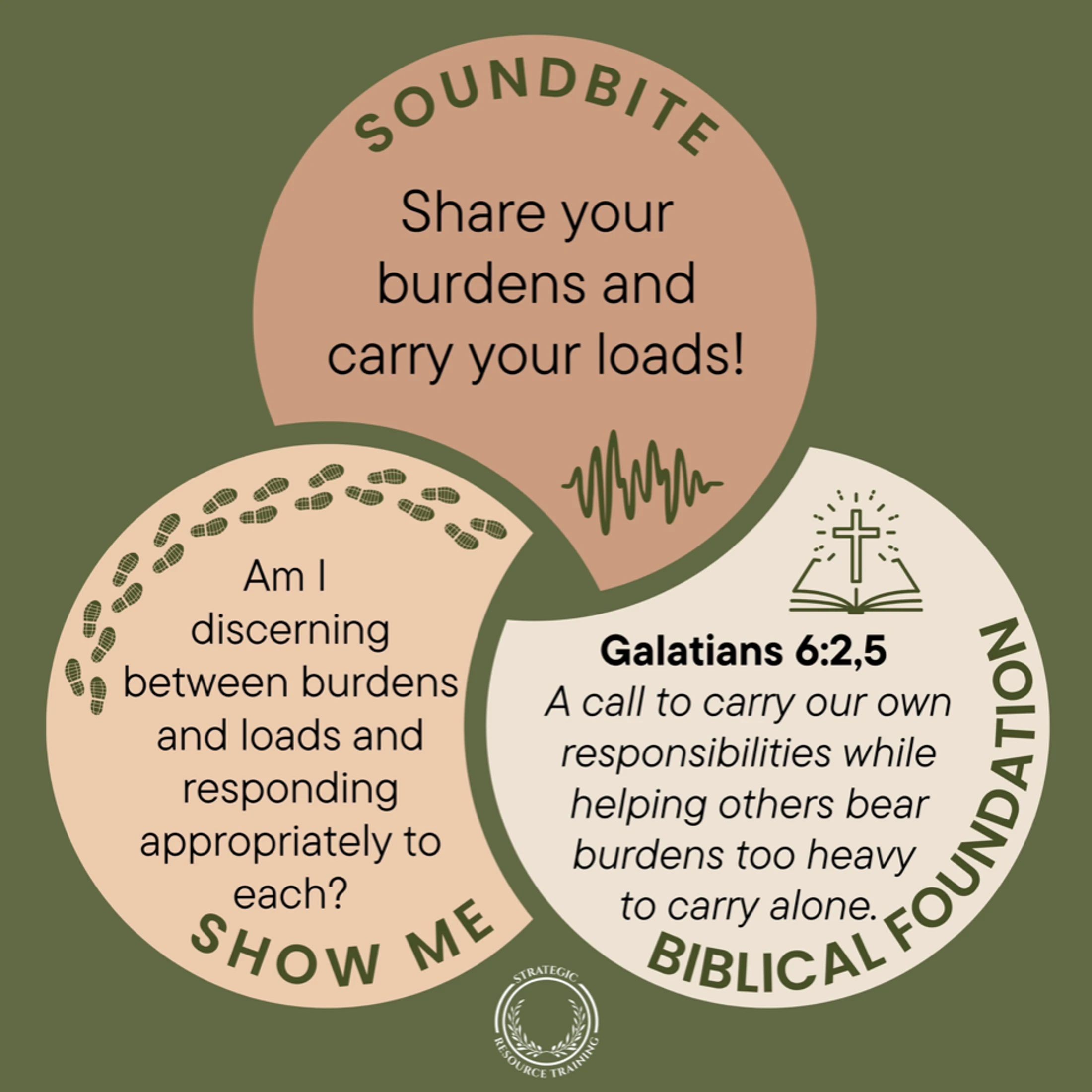
In Chapter 2, the authors share on Galatians 6:2,5.
Galatians 6:2: "Bear one another’s burdens and thereby fulfil the law of Christ."
Galatians 6:5: "For each one will bear his own load."
They share on these verses the Greek translation of the words ‘burdens’ and ‘load’.
Sometimes these 2 verses can seem in contradiction to each other; however, when studied and understood with clarity, these 2 verses are extremely helpful to us as we walk out our self-government and service in our family, work and community jurisdictions.
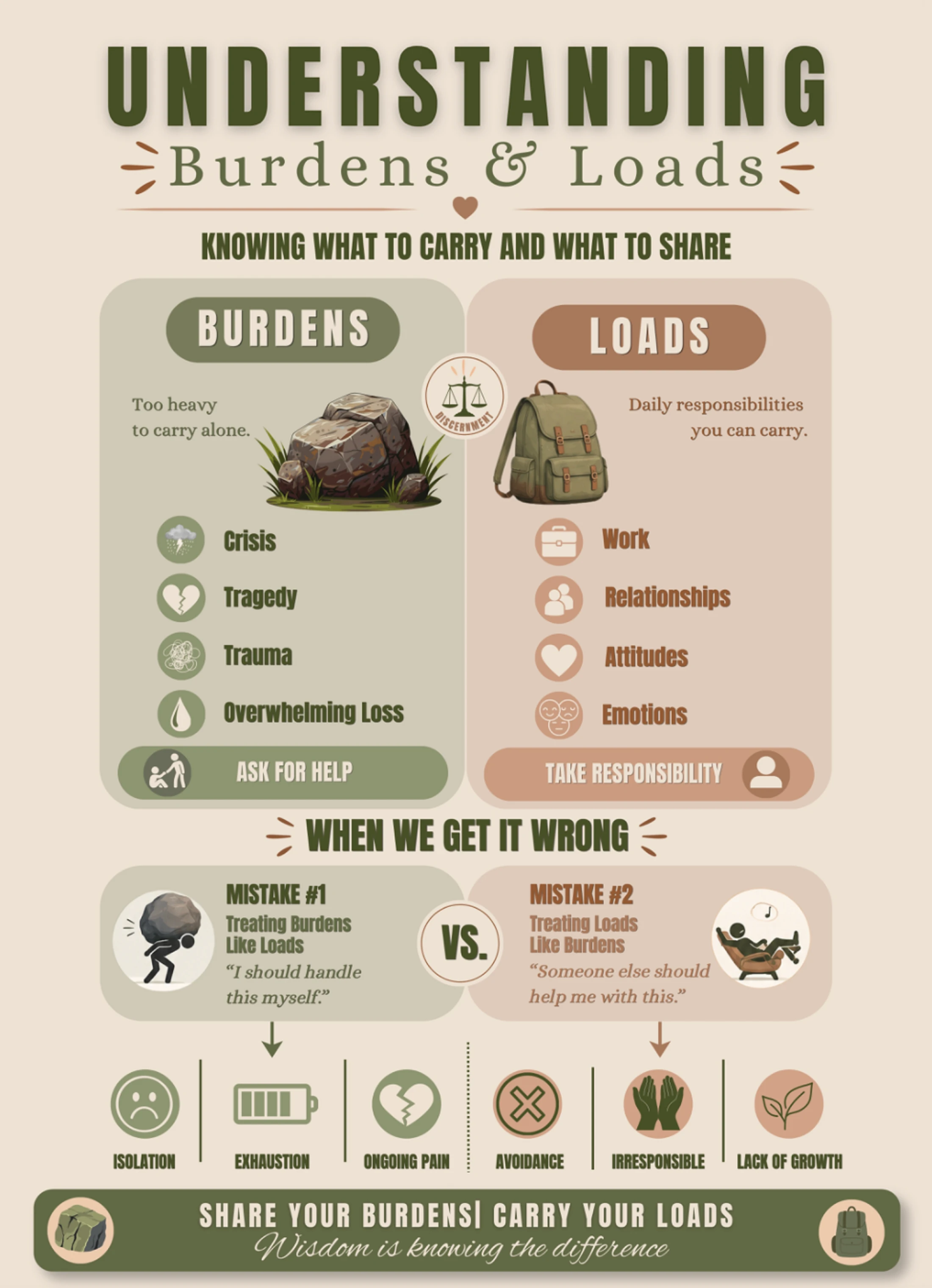
The Greek word for burden means “excess burdens that are so heavy that they weigh us down”. These burdens are likened to boulders that we are unable to carry ourselves. If we try, we risk breaking our bodies. We need help to carry boulders, those times of crisis, tragedy, trauma and overwhelming loss.
Contrast this to the Greek meaning for load, described as “our everyday load, our responsibilities, dealing with our emotions, feelings, attitudes and behaviours”. Basically, our Self-Government Jurisdiction.
Difficulties emerge when people mistake their boulders for daily loads and refuse support or mistake their daily loads for boulders that they are exempt from carrying. The former breeds persistent suffering; the latter breeds irresponsibility and immaturity.
This scripture supports the need for understanding and obedience in living a well-disciplined and well-governed life. It also releases us to ask for help and support for those times when life’s “burdens” are upon us.
We are responsible not only for ourselves but also for one another. At times, people carry burdens that are too heavy for them to bear alone. They may lack the strength, resources, or understanding needed to carry the load, and they need someone to come alongside them and help.
When we willingly deny ourselves in order to do for others what they cannot do for themselves, we demonstrate the sacrificial love of Christ. This is exactly what Christ did for us. He accomplished what we could never accomplish on our own—He saved us. His example calls us to serve others with the same selfless love and compassion.
As a parent of 5 children, I know too well the pain in training this “way” deep into our kids. At times, it would have been easy to do for our kids what they were capable of (or learning to be capable of). However, we persevered in handing over and training our kids in the responsibility of their self-government jurisdictions, and this has served them well as adults. Without this clarity in training, we risked giving in to our kids’ fleshly desires not to be in training and to take the easy road. We risked undermining their responsibilities as sons and daughters of the living God and weakening their character and ability to fulfil Father’s call in their lives.
The fruit of this training and equipping has released them as adults into a maturity and usefulness in the Kingdom of God and to the vocations and communities they are placed in. They are able to sacrificially serve others in times of crisis, tragedy, trauma and loss in ways that are helpful, loving and beneficial.
They have had to work at the mortification of their flesh, which stands in direct opposition to Godly government and at times, work really hard to overcome, and stay consistent and in training. They have put in place support systems, such as monthly check-ins with David and me, to support their self-government development. They are also training and equipping their children in the same way, and it is a delight as a grandparent to see the fruits of their labour in our beautiful grandchildren.
Are they perfect? No. Are their children perfect? No. But are they in training, and are they striving to live a well-governed life? Yes, Yes, Yes.
I hope that as you take another look at this scripture in Galatians, you see the clarity of the distinctions for us all. I also highly recommend this book as a great tool for training in self-government development.
God bless you and keep you. Natalie.